Community Relationship Manager
From 2022–2024, I led the design of a ground-up CRM for the Insight Global sales organization. Our stakeholders needed robust, realtime data from the sales field which had historically lived in unconnected, unsanctioned tools like OneNote and email.
- Role:
- UX leadResearch leadManager
- Responsibilities:
- User researchJourney mappingVisual designStrategyStakeholder management
Planet Express


- Industry
- Logistics & Freight
- Headquarters
- New York, NY
- YTD revenue
- $12.5M
- Employees
- 5,000
Account lead
 Brittany Thompson(484) 500-1000
Compliance
 Maya Castillo(678) 291-8080
Delivery lead
 Jordan Ellis(484) 500-1000

The challenge
Sales leadership needs data to make decisions for their org. Account managers (AMs) steward that data by going out into the field to build relationships with hiring managers. Still, by the time it reaches leadership, it’s a diluted facsimile of the rich conversation AMs lead.

My process
Discovery and synthesis → Strategy and alignment → Rollout success
Discovery
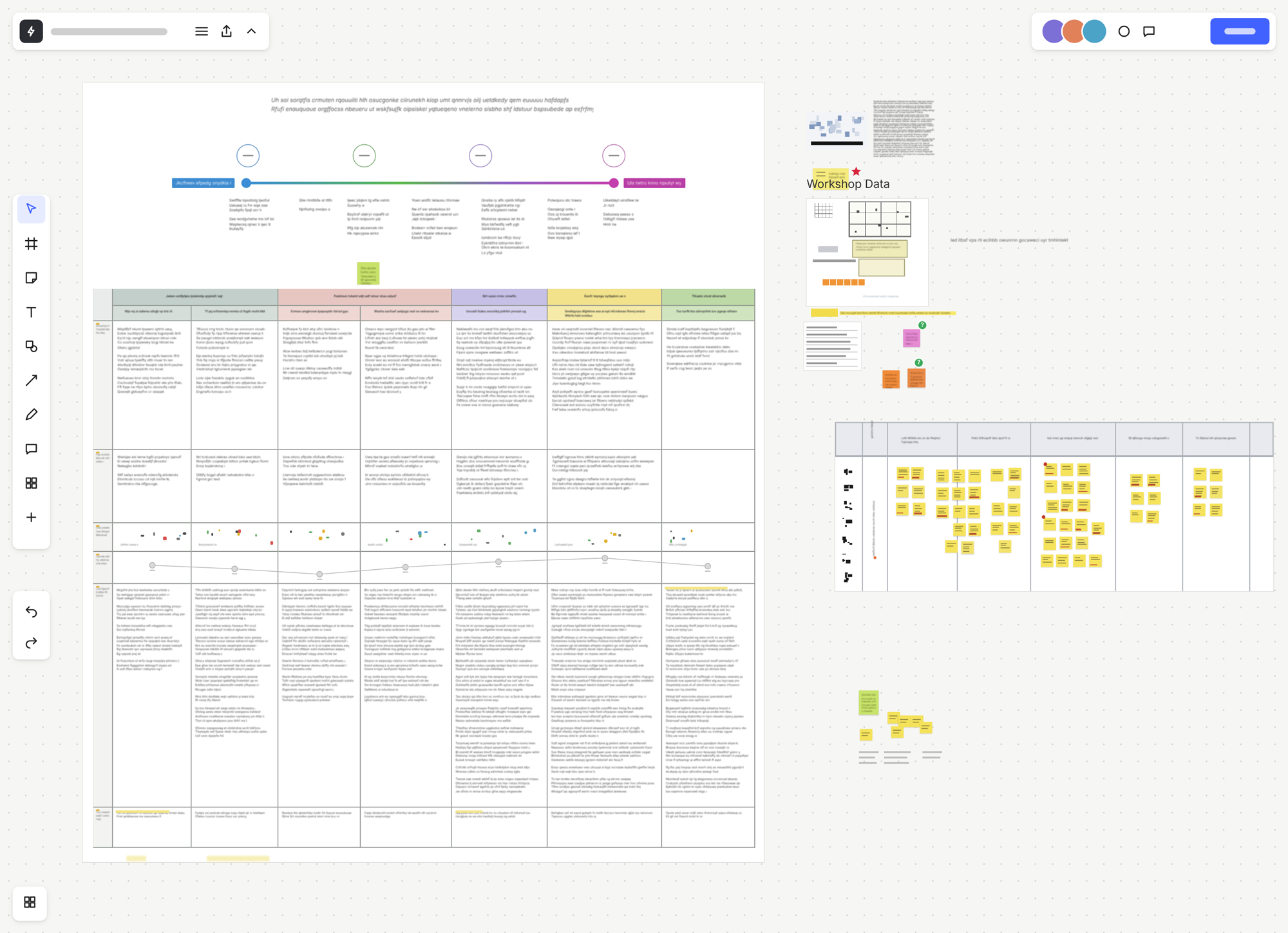
I ran ~20 user research interviews over a quarter to understand how account managers uncover, log, and share client details. The result was a journey map that would inform the rest of the project.
I also ran a half-day Design Thinking workshop with sales field leadership, from regional managers to VPs, to understand where their businesses break down, identify blind spots, and agree on a measure of success. The mix of virtual and in-person groups participated in To-be and As-is Scenarios, as well as Hopes and Fears.
From the findings I highlighted three areas fundamental to how account managers manage their book of business...
Org charts
Tasks
Client activity
Strategy and alignment
Using the journey map, I ran a sprint week with our product and dev managers to ideate solutions across the three opportunity buckets and weigh them on a 2x2.
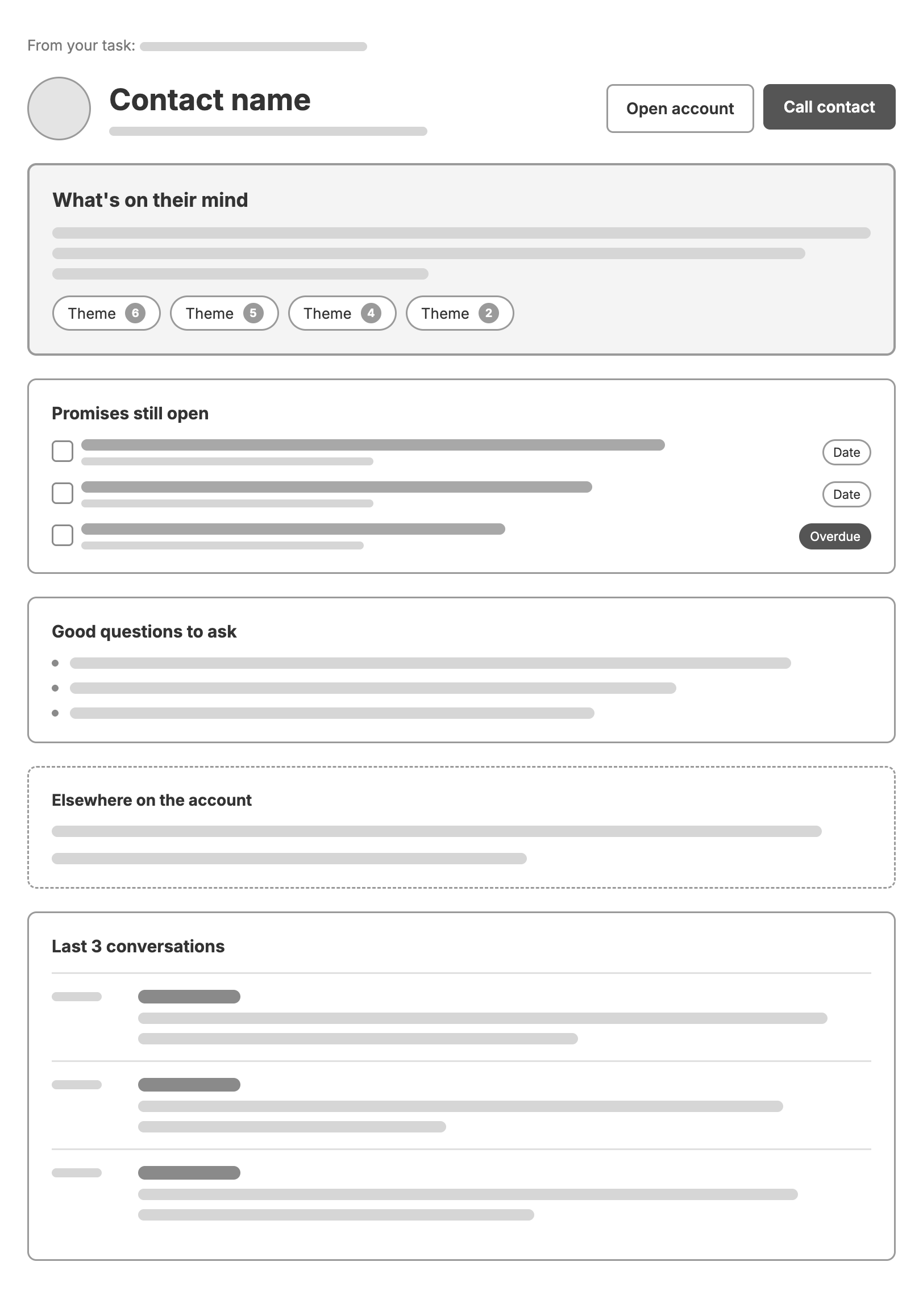
My pitch was a Community Relationship Manager. A CRM where the sales field not only tracks and manages their own book of business but also collaborates, celebrates, and unblocks one another. Using what I learned during discovery, I proposed we start by building an effective experience around one of the three primary uses, shifting the source of truth for client data from disparate, unsanctioned systems to a unified tool.
Org charts could be effective, but they’d depend on clean, robust data. That data didn’t exist. Tasks would have been a nice-to-have but not transformative enough, so I settled on a direction: Meeting activity is community activity.
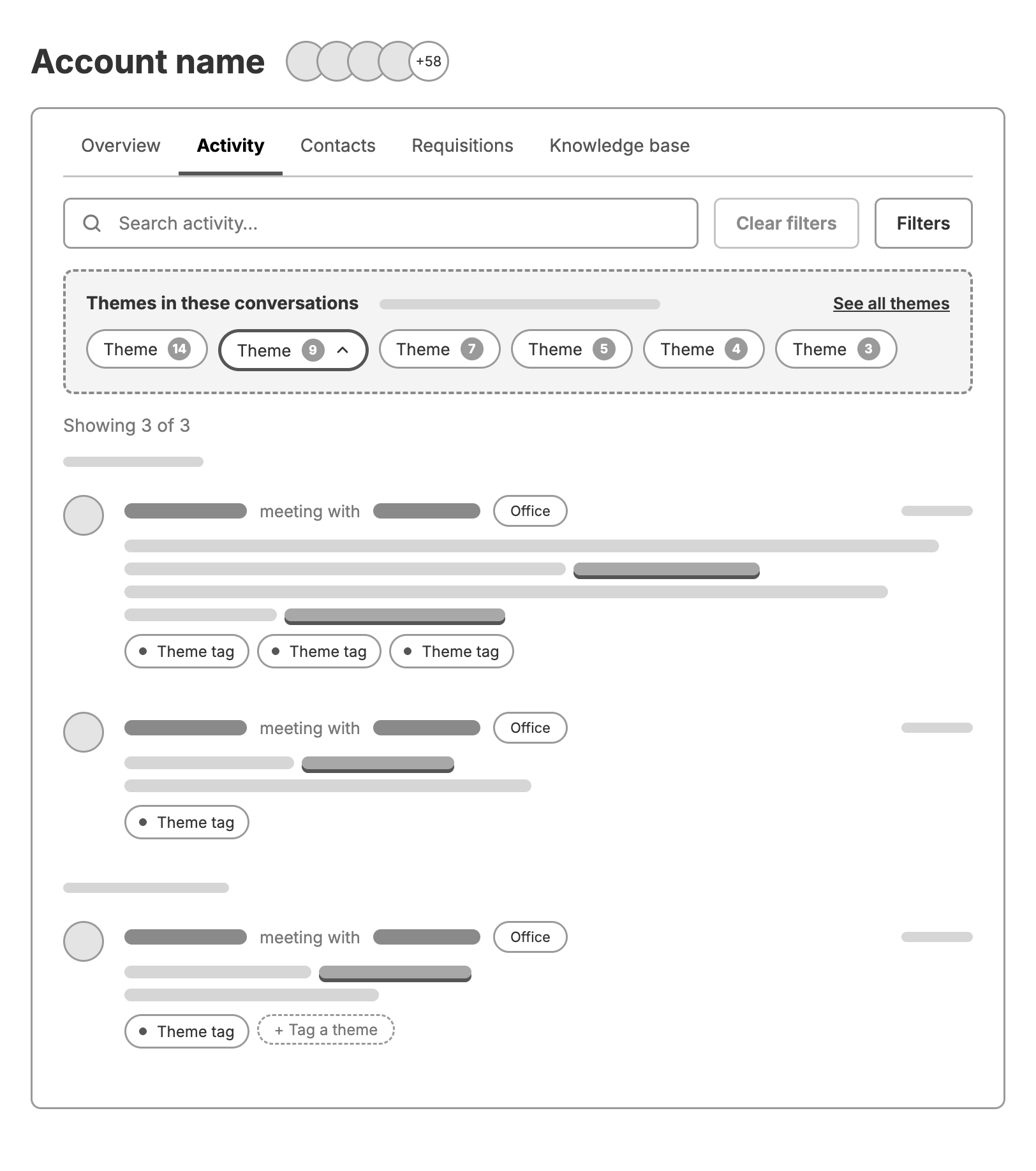
Celebrate the team that supports the client. Every account manager sees all meeting activity on a client, with no silos. A meeting doc’d to comply becomes a meeting doc’d for a colleague. It leveraged existing behavior (celebration and collaboration) to bring users into a unified system for client insights.
Showing 3 of 3
Today • Oct 1
-
Jordan Ellismeeting withTaylor LeeDallas10:30 AM
Mike and Taylor coordinated start timing, onboarding, and conversion expectations for several Red Oak and Irving positions, including an immediate backfill and offers for Francisco Olivarez and Heun Park. Mike will identify candidates and begin recruiting while Taylor tracks HR, acceptance, and background-check progress.
-
Stacy Jonesmeeting withTaz PriyaNew York10:00 AM
sync re Taz and vendor performance. need Taz to improve onsite presence. Chris doing great.
Yesterday • Sep 30
-
Hannah Wilksmeeting withYesenia BayleNew York5:30 PM
Yesenia confirmed the telematics budget is on the Oct 8 board agenda
Rollout success
The legacy system stayed live for a year during the new CRM rollout. Adoption was voluntary during this time. The engineering team made this decision so users could fall back to the legacy system if anything failed.
During the rollout, I co-led a training session with the product manager for 40 participants, including account managers and sales managers selected by our stakeholders. I led monthly playbacks with stakeholders, sharing what we learned during the training session and one-on-one feedback sessions.
~25% of account managers adopted the new CRM voluntarily in the first 3 months. This group, our champions, saw the value despite limited functionality, citing “ease of use” and “everything in the same place” as the top reasons for adoption. Our champions agreed to use the new CRM exclusively and encourage peers to do the same. With their help, roughly another 70% of account managers adopted it over the next 6 months. Only about 5% needed to be moved at the 12-month cutoff.
Activity entry points
01 / 04Dashboard
Impact
- Before
- 2,499
- Meetings captured day of (weekly avg)
- After
- 6,545
- Meetings captured day of (weekly avg)
When CRM was launched, 21% of client activity was captured the day of the meeting. For a sales org of 1,400 account managers, going on an average 8.5 meetings per week, 9,401 client meetings had no actionable data until the following week. Only 2,499 client meetings were captured day of.
A year after CRM launch, ~55% of client activity was captured the day of. The capture rate improved 162%, going from 2,499 (weekly avg) meetings captured day of to 6,545 (weekly avg) captured day of.
FAQs
What was your design stack?
Figma Canvas and FigJam.
What was your role?
I worked as lead UX designer on CRM from 2022–2024. I led two senior designers. We worked dual-track. On the discovery track, we collaborated across Scrum teams on strategy and direction. On the delivery track, each designer owned a Scrum team through handoff, UAT, and GTM.
What was your measure of success?
CRM is an ongoing project that continued after I moved on, but during my time, I measured success by adoption rate and churn. The dev team set a date to sunset the legacy system, so I had a deadline to migrate users from a system they knew well.
What did you learn during this project?
Design for the future. Deliver in increments. The legacy system was imperfect, but users knew the functionality. In this case, successful design meant delivering improvements incrementally to minimize disruption.